Digital Signal Processing (DSP) in Image Processing
Digital Signal Processing (DSP) in Image Processing
Digital Signal Processing (DSP) plays a crucial role in modern image processing by enhancing, compressing, analyzing, and transforming digital images. DSP techniques allow us to manipulate images in ways that are critical for various fields, from medical imaging to multimedia, computer vision, remote sensing, and even artificial intelligence.
This article will explore key DSP concepts, their application in image processing, and examples of their use.
Introduction to DSP in Image Processing
At its core, DSP is about analyzing and manipulating signals — in this case, images, which can be seen as two-dimensional signals. Each pixel in an image represents a data point, and DSP tools allow us to perform mathematical operations on these points to achieve desired results like filtering, compression, transformation, or restoration.
Common DSP techniques in image processing include:
- Filtering: Removing noise or enhancing features.
- Compression: Reducing file size for storage or transmission.
- Transformation: Changing the representation of an image (e.g., Fourier Transform).
- Edge Detection: Identifying boundaries within an image.
Key DSP Techniques in Image Processing
a. Filtering
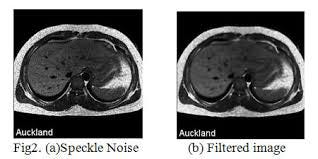
Filtering is one of the most common operations in image processing. It involves modifying pixel values based on some mathematical function to achieve effects like sharpening, blurring, or edge enhancement.
- Low-pass filters (smoothing filters) reduce noise and make the image less sharp.

- High-pass filters enhance fine details or sharpen the image.

Example Application: Noise removal in photographs or CT scans.
Image Example:
b. Fourier Transform (FT)
Fourier Transform converts the image from its spatial domain (pixel-based) to its frequency domain. It is used to analyze the frequency components of an image, which can be useful for tasks such as image compression and noise removal.
- Discrete Fourier Transform (DFT): This is the most common application of FT in image processing, where an image’s spatial data is transformed into the frequency domain.
Example Application: Filtering noise in the frequency domain.
Image Example:

c. Wavelet Transform
While the Fourier Transform provides frequency domain information, the Wavelet Transform allows for multi-resolution analysis of images. It is better suited for localized analysis and is commonly used in compression and denoising.
Example Application: JPEG 2000 compression uses wavelets.
Image Example:

d. Edge Detection
Edge detection is essential for identifying object boundaries within an image. It is often the first step in more complex processes like object recognition and image segmentation.
- Sobel Operator and Canny Edge Detector are widely used DSP-based algorithms for detecting edges.
Example Application: Detecting edges in medical imaging or autonomous driving systems.
Image Example:

e. Image Compression
Compression reduces the amount of data required to store or transmit an image. DSP techniques such as Discrete Cosine Transform (DCT) and Run-Length Encoding (RLE) are fundamental in compressing images without significant loss of quality.
- JPEG compression: Uses DCT to reduce image size with minimal quality loss.
Example Application: Reducing the size of images on websites.
Applications of DSP in Image Processing
- Medical Imaging: DSP enhances the quality of medical images (X-rays, MRI scans), helping doctors detect abnormalities.
- Satellite Imaging: Satellite data undergoes DSP for better clarity and accuracy in weather forecasting and mapping.
- Computer Vision: In autonomous driving, DSP helps process visual information for lane detection, obstacle avoidance, etc.
- Multimedia: In video streaming, DSP is used to compress and enhance video frames to ensure smooth playback.
Conclusion
Digital Signal Processing is foundational to modern image processing. Whether it’s for enhancing visual content, extracting meaningful data, or compressing files for efficient transmission, DSP techniques allow us to push the boundaries of what’s possible with digital images. From routine photo editing to advanced scientific research, DSP continues to unlock new frontiers in image analysis and manipulation.
Comments
Post a Comment